

Okay, so now we are officially in 2026, and the search landscape has shifted more in the last twelve months than it did in the previous decade. If you are still obsessing over “blue links” and keyword density, you are playing a game that has already ended. As we enter the second year of the Trump administration, the focus on American AI dominance and regulatory streamlining has paved the way for a massive explosion in AI-native search tools.
The statistics are clear: in early 2025, Google’s AI Overviews appeared in roughly 13% of searches; by 2026, they have reached a massive 1.5 billion people monthly. More shockingly, when an AI overview appears, the click-through rate (CTR) on the top-ranking organic page drops by an average of 34.5%. For small businesses, the challenge isn’t just ranking on page one anymore—it is being cited as the definitive answer by the AI itself.
1. Master Generative Engine Optimisation (GEO)
SEO is evolving into Generative Engine Optimisation (GEO). This is the practice of structuring your content so that generative AI engines—like ChatGPT, Perplexity, and Gemini—can easily digest and cite your brand in their summaries. In 2026, being “found” means being “quoted.”
To win at GEO, you must transition from broad keywords to “micro-queries.” Users are no longer just typing “plumber Austin”; they are asking, “where can I find a reliable plumber near me who works on weekends and offers emergency pipe repair?”
Create "Q-Blocks"
Start your sections with a clear question followed by a direct, 2-3 sentence answer.
Focus on Semantic Relevance
AI looks for meaning and context, not just word matches.
Use Comparison Tables
AI models love structured data that simplifies evaluation for the user.
2. The Rise of "Answer Engines"
While Google still holds nearly 90% of the market share, AI-native “Answer Engines” like Perplexity and ChatGPT have seen their traffic share grow by over 400% year-over-year. These platforms don’t just provide links; they provide curated advice.
Small businesses need to realise that these engines rely heavily on brand citations and media mentions to build their knowledge base. If you aren’t being talked about on reputable third-party sites, the AI won’t know you exist.
Build Topical Authority
Instead of one-off blogs, create deep-dive pillar content that covers every aspect of a specific niche.
Earn Direct Citations
Focus on PR and guest posting to ensure your brand name is linked to your expertise across the web.
3. Multimodal Search: The Ear and the Eye
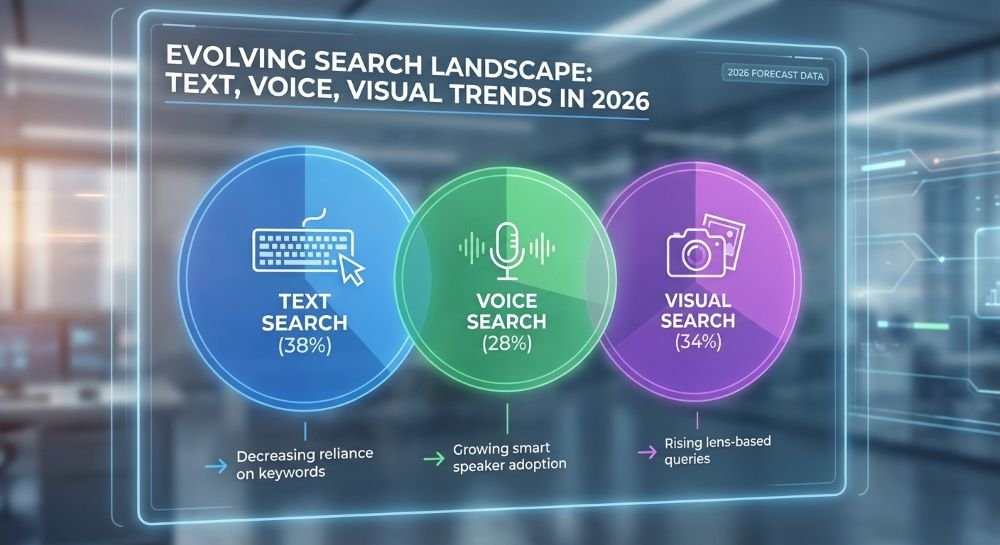
In 2026, search is no longer just about typing. Multimodal AI allows users to search with images (Google Lens) and voice assistants (Siri, Alexa, and Gemini Live) with unprecedented accuracy. This is a huge opportunity for local businesses that rely on visual appeal or quick service.
For a small business, this means your “alt text” and image quality are more important than ever. AI now “reads” your photos to understand the vibe of your restaurant or the quality of your craftsmanship.
Optimise for Google Lens
Use high-resolution, original photos of your products and storefront.
Conversational Long-Tails
Optimise for the way people speak (e.g., "Hey, find me a quiet café nearby where I can work on my laptop").
4. Local AI Discovery: Beyond "Near Me"
Local search has become incredibly granular. Thanks to the Trump administration’s 2025 AI Action Plan, which encouraged the expansion of federal and local data accessibility, AI engines can now process real-time “micro-contexts.”
Users are now asking for specifics like “a café with outdoor seating that isn’t too loud on Thursday afternoons.” If your website and schema don’t include these details, you are invisible.
Hyperlocal Schema
Use LocalBusiness schema to include price ranges, amenities, and specific service areas.
Sentiment Monitoring
AI engines analyse the "vibe" of your reviews to see if they match the user's specific intent.
5. The Death of the "Blue Link" & Zero-Click Search
We have officially reached the “Zero-Click” era. With the majority of informational queries being answered directly on the search results page via AI Overviews, traditional organic traffic to your blog might actually decrease—even if your visibility increases.
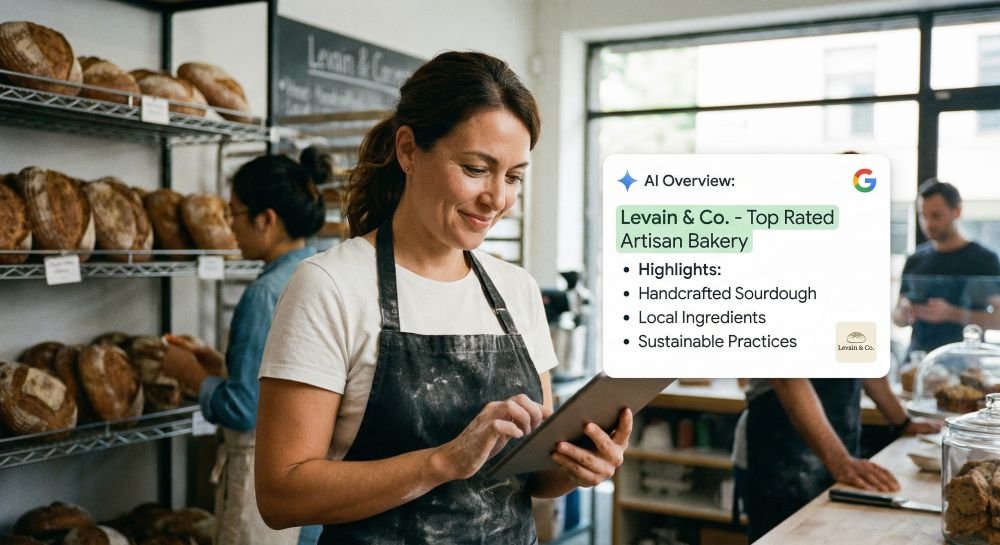
The key is to treat the AI summary as a branding channel. If the AI answers the question but cites your brand as the source, you have won the trust of that lead, even if they didn’t click through to your site yet.
Focus on Transactional Content
Direct your SEO efforts toward pages that lead to a sale, while using GEO for informational awareness.
Add FAQs to Every Page
This provides the "snackable" content AI engines love to pull into their summaries.
6. E-E-A-T and the "Human-First" Requirement
As the web becomes flooded with synthetic, AI-generated content, search engines and users are craving authenticity. Google’s E-E-A-T (Experience, Expertise, Authoritativeness, and Trustworthiness) is now the ultimate filter.
In 2026, search engines are looking for “Proof of Human.” This means sharing personal anecdotes, original research, and unique perspectives that an AI cannot replicate.
Author Profiles
Ensure every piece of content is tied to a real person with a verifiable background.
Original Media
Stop using stock photos. Use real photos of your team, your office, and your work.
7. Video Search and AI Summarisation
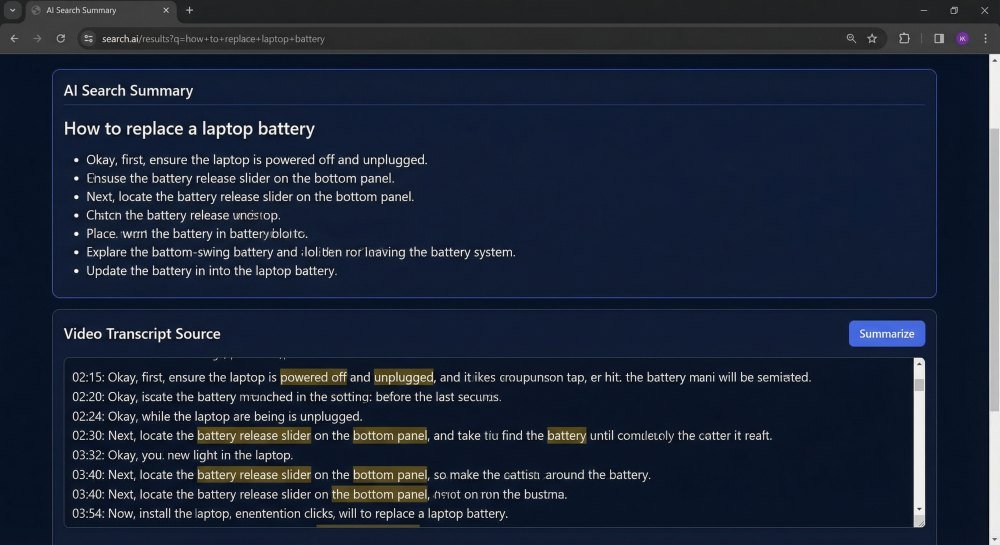
Video is no longer just for YouTube. Search engines now index specific “moments” within videos to answer user queries. AI tools can summarise a 10-minute video into a 3-sentence answer for a user.
If you aren’t producing video content, you are missing out on a massive portion of the 2026 search market.
Transcribe Everything
Provide clear transcripts and timestamps for all video content to help AI "read" your videos.
Short-Form Focus
Create quick "how-to" videos that directly answer common customer pain points.
Your 2026 AI Search Checklist
As they say, the best time to start was yesterday, but the second best time is right now. Use this checklist to audit your site for the AI age:
Audit for GEO
Do your H2s and H3s ask the questions your customers are actually asking?
Implement Structured Data
Is your LocalBusiness and Product schema up to date?
Strengthen Brand Citations
Are you listed in local directories and mentioned in industry blogs?
Optimise for Multimodal
Do your images have descriptive, context-rich alt text?
Verify E-E-A-T
Does your content sound like it was written by a real expert with actual experience?
So here we are—at the threshold of a new era of discovery. AI-driven search isn’t something to fear; it’s a tool to leverage. By focusing on clarity, context, and human expertise, your small business can thrive in a world where the AI is the librarian and you are the most cited book in the room.
Need help future-proofing your business for the 2026 AI search wave? Contact the SearchMantra team today for a custom GEO audit!