

Why rankings still matter, but clicks matter less in 2026 SEO (and citations matter more)
If you’ve felt that your SEO-targeted traffic is tougher to grow even when your rankings look “fine,” you’re not imagining it. Due to the use of artificial intelligence Overviews, which Google is using to answer queries directly on the result page, and people also search on social platforms more than before.
What is Hot in SEO right now?
The biggest trend is that SEO is shifting from “get the click” to “own the answer.” In practice, that means brands care more about being featured in AI Overviews, snippets, and other SERP features, even if the user doesn’t always click through.
Another trend is ‘search everywhere’. Consumers discover products, services, and opinions on Instagram, TikTok, YouTube, and communities, not just Google. This alters the types of content that function (more proof, more real experience, more digestible answers).


What is an AI overview in simple words?
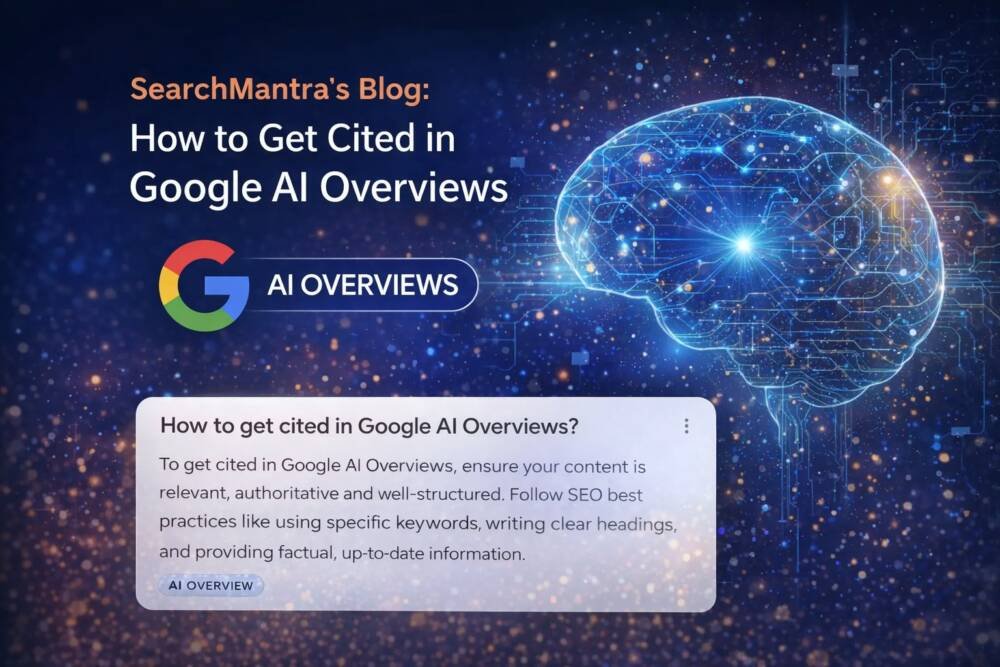
Google provides an AI overview when a query inquires about a specific topic. It is the summary box that appears for some searches. In particular, the overview box will give the user a summary answer and link to sources used for that answer. For a user, it’s like asking a question and getting a mini-report instantly without opening 5–10 pages.
If you’re a site owner, this is a bit of a double-edged sword; you could get quoted (great), but you could also see fewer clicks since the answer is already on the SERP.
How common are AI Overviews in 2025 (and why should you care)?
According to Semrush, AI Overviews appeared for 6.49% of queries in January 2025, rose to 24.61% in July, and then dropped to 15.69% in November. Despite that retreat, this is still a meaningful slice of search results that didn’t exist in the same way a short time ago.
Artificial intelligence overviews are not confined to informational queries any longer. According to Semrush, the percentage of informational automobile industry updates (AIOs) dropped from 91.3% in January to 57.1% in October 2023, while the commercial ones jumped from 8.15% to 18.57%. Also, the transactional AIOs rose from 1.98% in January to 13.94% in October 2023 and navigational from 0.84% to 10.33% in the same period. The use of AI-generated answers is getting more prevalent in common queries, which are closer to purchasing and brand decisions.
Are clicks really dropping, or is it just an impression?
Clicks are dropping, and we have data to prove it. As per a study done by Seer Interactive on 25.1M organic impressions on 3,119 informational/educational queries, there was a drop in organic CTR on those queries with AI Overviews from 1.76% (June 2024) to 0.61% (September 2025), a drop of 61%.
People conducted 20-word or less searches during testing, which all had a localhost 2.72% click-through rate, a 41% drop. The wider environment is becoming “answer-first”, not just “click-first”, and not just in AIs’ Overviews.
What will be the new SEO victory if clicks drop?
The AI Overview cites an expanding win that is linked within itself. Seer says that when a name brand was mentioned in an AI Overview, it received about a 35% higher organic CTR (0.70% versus 0.52%) and about a 91% higher paid CTR (7.89% versus 4.14%) as compared to when it wasn’t mentioned (averages for Q3 2025).
The term “AI citation strategy” is trending for a reason: you are optimising not just to rank under the AI answer, but to become one of its sources. Essentially, your competition consists of becoming the reference and not just the answer.
Why is search everywhere important to SEO?
Younger people are not relying only on Google. According to the Pulse Survey Q2 2025 by Sprout Social, a whopping 41% of Gen Z begin their searches on social platforms first in contrast to 32% who start on search engines.
The same research found that 37% of consumers prefer social-first for product reviews and recommendations, while 35% prefer social-first to find local restaurants and activities. In the previous six months, it also stated that consumers 76% reported that social content impacted a purchase (90% Gen-Z and 84% Millennials).

What does this mean for a business owner or marketer reading this?
Whether you operate a service organisation, an e-commerce brand or a SaaS company, you now have two businesses to compete with. You want to rank on Google (and in the answer layer: AI Overviews/snippets). And you’re looking for credibility on social platforms, as that’s where people pre-research before they search on Google.
Many brands feel like “SEO got harder.” In other words, the same effort that used to return a steady stream of clicks now returns impressions, visibility but fewer visits. Brands that learn to adapt treat visibility, trust, and mention-share as part of SEO, not separate from it.
How to write content that’s more likely to get cited (without sounding robotic)?
Answer first and then explain- like a helpful friend. The pages that receive citations tend to have a clean question-based header, a short, direct answer immediately after the header, and proof that the answer is reliable. Such proof may take the form of examples, sources, clear definitions and so on.
You can adapt the following reader-friendly structure to almost any article:
- Set the exact query as the heading (for example, “How does AI Overviews affect SEO clicks?”).
- Put your answer directly below this in 1–2 sentences (to quote easily).
- Include a brief “What we are seeing in the data” section with 1-3 graphics and link to the paper.
- Incorporate an example that your ideal customer would use when searching online.
- Conclude with “Next Steps” in 3-6 bullet points (simple actions, not jargon).

What metrics should you now track in SEO reports?
The CTR can still fall even if the ranking stays stable. Thus, rankings are helpful but not all telling any more. Based on Seer’s measured CTR shifts, combining rankings with (impressions, SERP feature presence and whether you’re cited) is smarter.
If you’re executing this for clients or internal stakeholders, this shift in reporting can prevent panic on dips in traffic despite ‘good SEO work’. It also gets expectations in line with how search is behaving in real-time right now.
Conclusion: SEO is not Dead, it’s answer-first
According to your article, SEO is one of the best long-term channels, but it’s not just a traffic game any more. It’s becoming more and more a credibility and visibility game where being referenced inside the answer (or influencing the decision before the search happens) can matter as much as the click itself.
The post SEO Content Article appeared first on Azira.
If you build content that’s genuinely useful, easy to quote, and backed by real-world evidence, your content has a better chance of being one of the sources that AI chooses – plus it builds trust with humans too.
Small Businesses’ shortcut
Whether you are a small business and need one place to start, Search Mantra can be positioned as a partner who helps you become ‘AI-driven search ready’ (content + technical + measurement) instead of trying to cobble it all together from 20 guides.
SearchMantra Inc. is, publicly at least, registered as a full-service digital marketing agency with a focus on online marketing and design services, the things that for most small businesses, are what is needed when AI Overviews and zero-click behaviour reduce predictable SEO clicks.

What “trend analyser” should mean (for a real business)?
A practical “trend analyser” for 2026 SEO is basically being able to spot what people are looking for that’s on the up, what is seasonal and what that means for your content or pages before your competition does so.
You can use common tools, for example, Google Trends, for demand patterns over time. Then convert that into simple content updates, FAQ pages and service/product pages to answer real questions in a clear way.